Nina Xiang recently joined the BBC to discuss one of the defining geopolitical and technological questions of our time: whether the world is heading toward two increasingly separate AI ecosystems led by the United States and China.
The conversation explored far more than chips and algorithms. At the center of this rivalry is a deeper question about industrial policy, technological sovereignty, infrastructure control, and how nations choose to deploy artificial intelligence to strengthen their economies and societies.
One of the key points I discussed is that the current AI divide is no longer temporary. It is becoming structural.
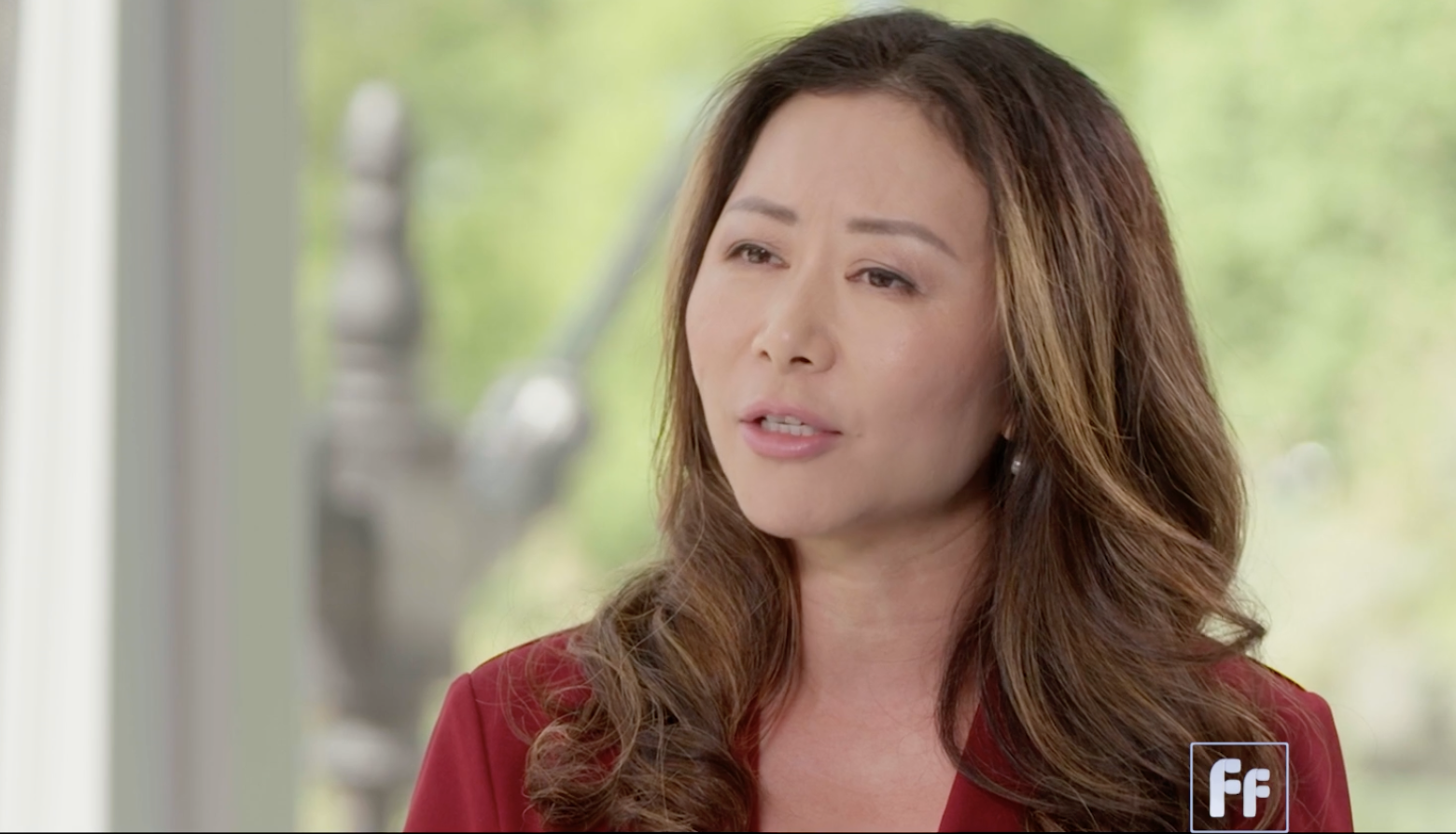
Nina Xiang was featured on a Full Frame segment by CGTN America, discussing the global trajectory of technology and innovation, with a focus on artificial intelligence and U.S.–China dynamics.
In the program, Nina Xiang examined how technological advancement is increasingly shaped by a combination of state policy, market forces, and entrepreneurial ecosystems. She emphasized that innovation today is no longer confined to a single geography, but is emerging through diverse and sometimes unexpected hubs across the world.
A key theme of the discussion was the evolving structure of global competition in AI. Rather than a linear “race” with a single winner, Nina Xiang highlighted a more complex reality: parallel systems developing with different strengths, priorities, and approaches. The United States continues to lead in foundational research and frontier models, while China is rapidly advancing in large-scale application and commercialization.
Nina Xiang was featured in a special program by CGTN America, discussing the evolving dynamics of artificial intelligence development between the United States and China.
In the interview, filmed alongside her participation at the Asia Society’s Future U.S.–China Conference in San Francisco, Nina Xiang shared perspectives on the shifting balance between competition and cooperation in the global AI landscape.
She highlighted growing anxiety in the U.S. around China’s rapid technological advancement, particularly following recent breakthroughs that challenged prior assumptions about the pace and structure of China’s innovation ecosystem. Drawing on her earlier work, including Red AI, she reflected on how pockets of highly focused innovation—rather than system-wide openness—are driving China’s progress in AI.
At the same time, she emphasized that despite ongoing geopolitical tensions and partial decoupling, deep interdependence between the two economies remains. From retail and manufacturing to research and selected areas of technology, collaboration continues in ways that are often overlooked in public discourse.
Looking ahead, Nina Xiang outlined a likely divergence in AI development paths: the United States leading in foundational research and model innovation, while China focuses on large-scale application and deployment across industries such as healthcare, education, and productivity.
She also framed U.S.–China technology relations in pragmatic terms, arguing that the outcome is unlikely to be a simple “win-lose” scenario. Instead, the trajectory points toward a mix of competition, negotiation, and selective collaboration—what she described as a spectrum ranging from “green zones” of cooperation to “red zones” defined by national security constraints.
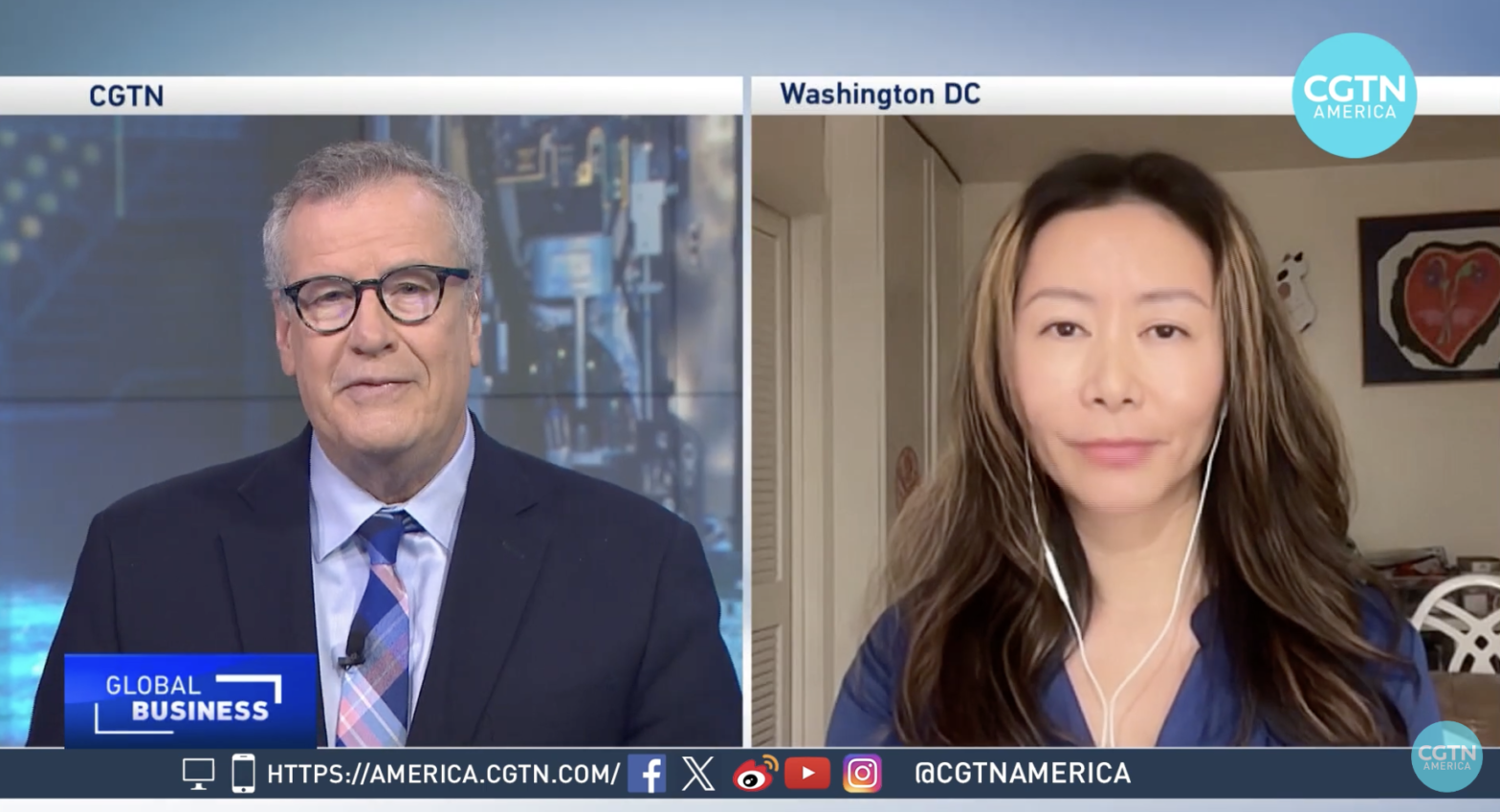
Nina Xiang was featured on a CGTN Global Business segment discussing the evolving dynamics of the global AI race between the United States and China.
In the interview, she framed China’s antitrust investigation into Google as a geopolitical signal rather than a purely regulatory move—highlighting how China is increasingly willing to use economic tools to assert strategic leverage. While the direct business impact on Google may be limited, the broader message reflects rising tensions and a more assertive posture in tech competition.
Turning to recent developments in AI, Nina Xiang addressed the market reaction to breakthroughs from Chinese startups such as DeepSeek, noting that while the initial impact—wiping significant value from U.S. tech stocks—was striking, parts of the narrative may be overstated. She emphasized that comparisons around cost and capability are often not “like-for-like,” and require more careful evaluation.
More importantly, she reframed the competitive landscape: the current focus on which country has the “best” or “cheapest” model is ultimately short-term. Over time, AI—what she describes as “machine intelligence”—will become commoditized, similar to electricity: widely available, increasingly affordable, and deeply embedded across all sectors of the economy.
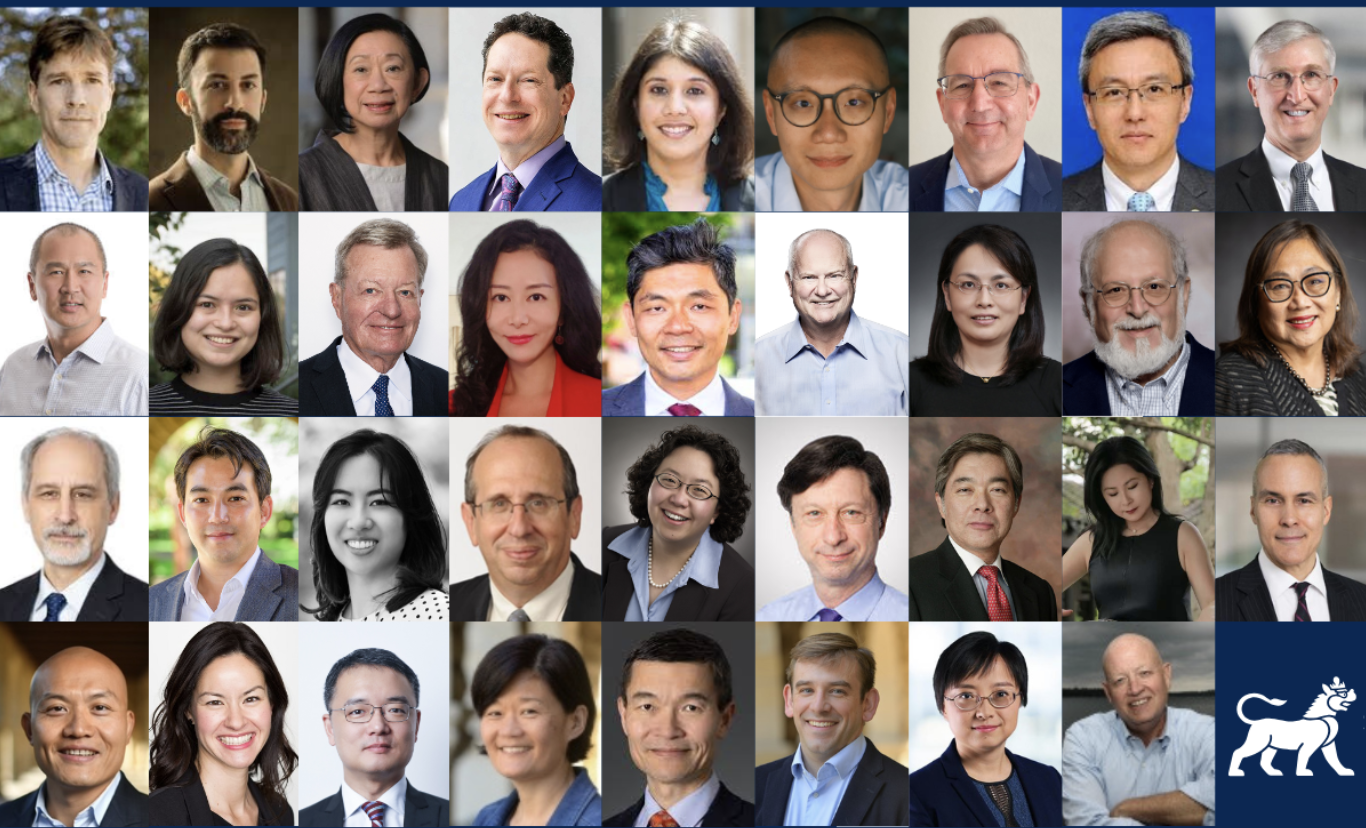
Nina Xiang attended the Future U.S.–China Conference 2026 hosted by Asia Society, where policymakers, investors, and industry leaders examined the evolving dynamics between the United States and China.
The conference focused on a shifting global order shaped by technological competition, economic realignment, and geopolitical uncertainty. Discussions highlighted the growing centrality of AI, supply chains, and strategic industries as both countries redefine their positions globally.
Nina Xiang moderated the panel Authors on China and Technology, a discussion focused on understanding China beyond headlines by examining the deeper forces shaping its industrial policy, innovation ecosystem, and technology sector.
The session brought together leading voices including Patrick McGee and Dan Wang, who shared perspectives on China’s advancement in strategic technologies, the role of the state in driving innovation, and the implications for global competition and cooperation.